

 Religious Education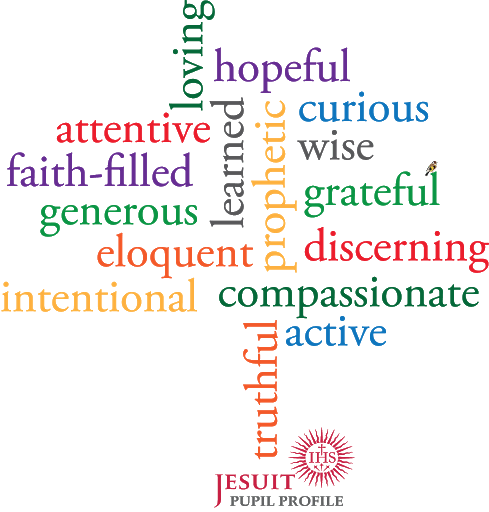
St. Joseph's Primary School follows the curriculum strategy – Discerning Disciples

Discerning Disciples is the religious education curriculum for Catholic primary schools in the Archdiocese of
Birmingham. It has been developed in full accordance with the Religious Education Directory (RED), the curriculum
directory issued by the Catholic Bishops' Conference of England and Wales which sets out what pupils in Catholic
schools should know, understand, and be able to do in religious education.
The curriculum supports the shared mission of our diocesan family of schools: forming Christ-centred pilgrims of
hope with kind hearts, questioning minds, a thirst for knowledge and a hunger for justice.
Discerning Disciples is organised into the six branches' of the RED, which align with the Catholic Church's liturgical
year:

Across these branches, pupils encounter Sacred Scripture, deepen their knowledge and understanding of Catholic
faith and teaching, study prayer, liturgy, and the sacraments, and consider how faith is lived in the world. Through
Dialogue and Encounter, they also leam about other faiths and religions, and develop the knowledge, understanding,
and dispositions needed for respectful dialogue.
At the heart of Discerning Disciples are the REDs three ways of knowing: understand, discern and respond. Pupils are
therefore encouraged not simply to acquire religious knowledge, but to think deeply about What they learn, make
connections, consider different perspectives and make thoughtful judgements. In doing so, religious education helps
pupils to grow in knowledge, wisdom and understanding and to reflect on how what they learn might shape the way
they live
Aims
The purpose of Religious Education in a Catholic school is to give children knowledge, understanding and experience of Catholic life and faith and to ensure the development and transmission of Catholic faith and culture for the Catholic community.
At St Joseph’s we aim to give the pupils the opportunity to:
- raise their awareness of the presence of God in our Catholic school and in our life.
- develop their understanding and knowledge of the “Good news” of Jesus more clearly and relate it to their everyday lives.
- live every day as people who love God and those around them, his people.
- live out their Christian faith, their response to God’s revelation, in such a way that their faith becomes central to their lives and the basis of all their decisions.
- develop the range, depth and quality of their prayer life.
- enable reflection on experience, values and attitudes in the light of the scriptures and teaching of the church.
- raise self esteem, mutual respect and valuing of the human person, recognising that all are made in the image and likeness of God.
- Religious Education is taught as a core subject and is given prominence throughout the school.
- Teachers use the Diocese’s planning, resources and assessment materials to ensure consistency and progression.
- Lessons provide opportunities for theological discussion, reflection and the exploration of big questions.
- Prayer and liturgy are integral to the school day and closely linked to classroom learning.
- Catholic Social Teaching is explicitly taught and embedded across the curriculum.
- Children participate regularly in Mass, class liturgies, retreats and charitable activities.
- Adaptive teaching strategies are used to ensure that all pupils can access the curriculum and achieve success.
SMSC
As a Catholic school, everyone at St Joseph’s is fully committed to promoting our virtues linked to the Gospels.
Pupils at St. Joseph's are growing to be:
Grateful for their own gifts, for the gift of other people, and for the blessings of each day; and generous with their gifts, becoming men and women for others.
Attentive to their experience and to their vocation; and discerning about the choices they make and the effects of those choices.
Compassionate towards others, near and far, especially the less fortunate; and loving by their just actions and forgiving words.
Faith-filled in their beliefs and hopeful for the future.
Eloquent and truthful in what they say of themselves, the relations between people, and the world.
Learned, finding God in all things; and wise in the ways they use their learning for the common good.
Curious about everything; and active in their engagement with the world, changing what they can for the better.
Intentional in the way they live and use the resources of the earth, guided by conscience; and prophetic in the example they set to others.
Catholic Social Teaching
Catholic Social Teaching is based on the belief that God has a plan for creation, a plan to build his kingdom of peace, love and justice.
It holds that God has a special plan for every single one of us, whoever we are. Our part in this plan isn’t just limited to things ‘spiritual’, or times when we do “religious things.” It involves every aspect of our lives, from the things we pray about, to how we live as a responsible global citizen.
Our part in this story is a kind-of vocation for the common good, a call to treat everyone as our brothers and sisters. It is something that we all share.
The Catholic Church has seven principles of social teaching that we share with our children through all that we do, through the curriculum, special events and activity and through our ordinary actions in school.
There are 7 principles of Catholic Social Teaching, we are called to uphold them.
- Option for the Poor and Vulnerable– Option for the poor and vulnerable reminds us of God’s preferential love for the poorest and most vulnerable people and the love we must show too. It is our duty as followers of Christ to help those who are less fortunate in any way we can. This can be through monetary contributions but also through time and acts of service.
- Dignity of the Human Person – God made each one of us. This makes us incredibly special. It doesn’t matter who we are, who our friends are, what we own, what we look like. What matters is that we are special because we are God’s children. This means that we must treat others with respect and fairness because God made us all.
- Stewardship of God’s Creation – How do I show respect for Creation? The earth and all life on it are part of God’s creation. We are called to respect this gift. We are responsible for taking care of the world we live in and for sharing all the wonders and resources the earth gives us. Making wise choices about the care of God’s creation is called good stewardship.
-
Solidarity and the Common Good– The common good is reached when we work together to improve the wellbeing of people in our society and the wider world.
- Rights and Responsibilities - All God’s people have the right to food, work, clothes, a home, school and medical care. These ‘rights’ are things that every person on earth needs in order to live a full life. But many people do not have them. Jesus wants people who enjoy these rights to help their sisters and brothers obtain their rights. It is not enough to feel badly for others. Jesus says it is our responsibility to see that everyone receives his or her rights.
- Family and community - Jesus understood that people need each other. We all need our families, friends and neighbours. He tells us that these important people can help us. Jesus says that we must help them too. Doing this, we create a loving community where everyone can live life to the full.
- Dignity of work - Everyone’s work is of value. There are many kinds of work. In each job, workers deserve to be treated with respect; work safely; work reasonable hours, and earn fair wages. They deserve this because they are made by God. Our work gives us the means to live, but it is also a chance to use the talents God gives us. Our work is our way of cooperating with God to help create a better world.

We are also committed to promoting British Values which have been defined by Ofsted under four headings:
- Democracy
- The Rule of law
- Individual Liberty
- Mutual Respect and Tolerance of Those With Different Faiths and Beliefs.


